
Podcatch-22: An Aural Review
wherein I try to reflect on my listening habits

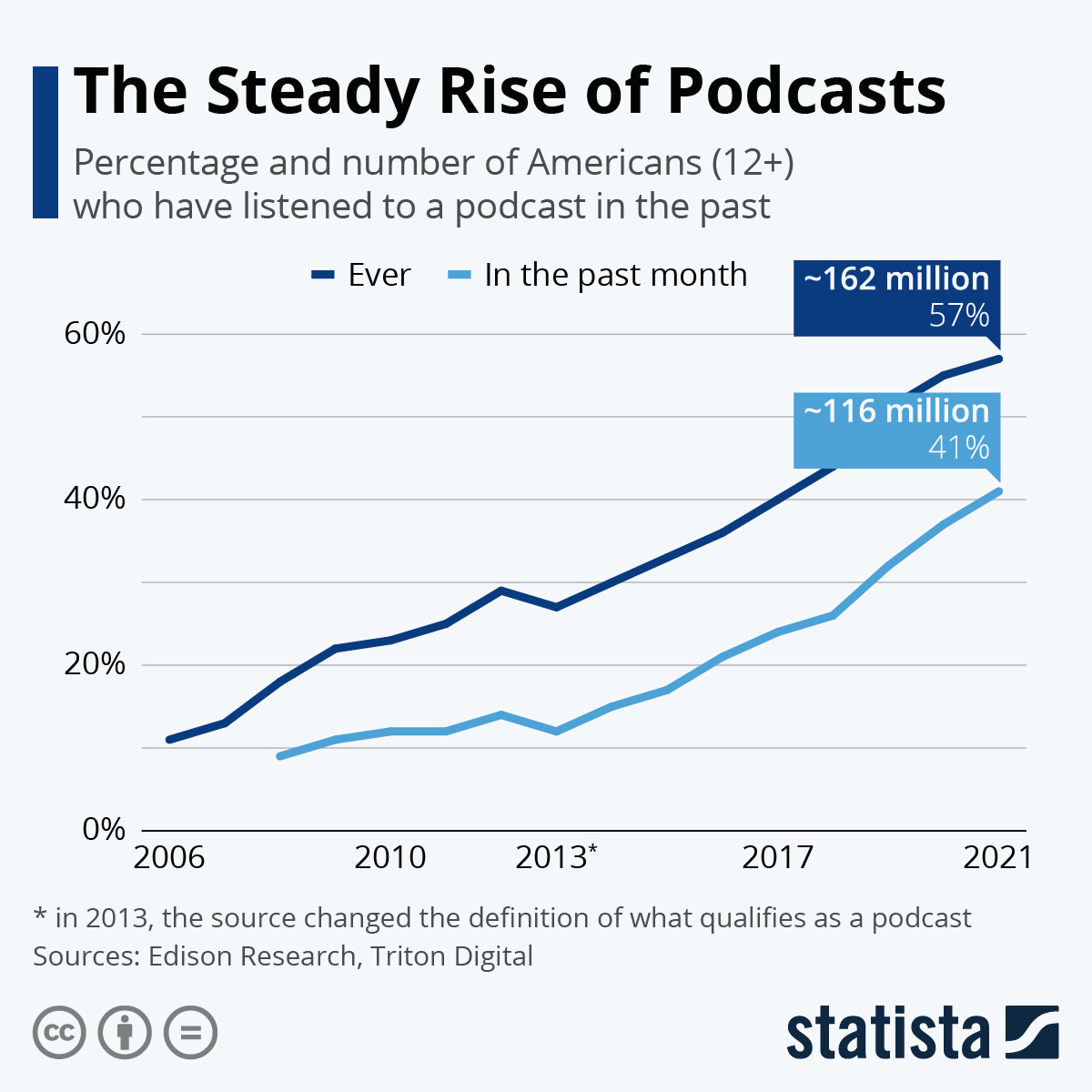
Podcasting has been having a moment. Growth and adoption of long-form audio streaming content is through the roof. The cliched joke is that “everyone has a podcast.” I'm a shameless convert and evangelist myself. It's simply an efficient way to expand one’s exposure to facts, news, commentaries, and narratives. There is no limit to topic areas either. Seemingly every niche has been filled. Plus, I think the typical format of interview or roundtable shows allows for the scaling of conversation for listeners. Instead of being in one place able only to converse with those in one’s immediate vicinity, podcasts enable the listener to engage in repeated and selective eavesdropping. Podcast fiends like myself can listen to a half-dozen to a dozen of these conversations in a day - just crank the playback speed to 2-3X and clip long pauses. And these are conversations between eminent public intellectuals, experts in various esoteric domains, and luminaries of all kinds!
Of course, too much information can be a bad thing. And the quality of the information is another important consideration. A diet of aural junk food is certainly ill-advised. I try to have the best epistemic hygiene and limit the amount of entertainment type shows that I listen to. My podcast guilty pleasures are sports talk shows like The Bill Simmons Show and cultural commentary like RedScarePod and Blocked and Reported. Most of the time, I am consuming in-depth content on serious topics: precision oncology, world events and politics, macroeconomics, literature, etc. I do worry that maybe heavy reliance on a podcast-information-delivery mechanism may drive brain rot in the same ways as social media. But isn’t it still a life-changing boon to the sophisticated listener? And can’t we find a healthy and enriching way to navigating the podcast-sphere?
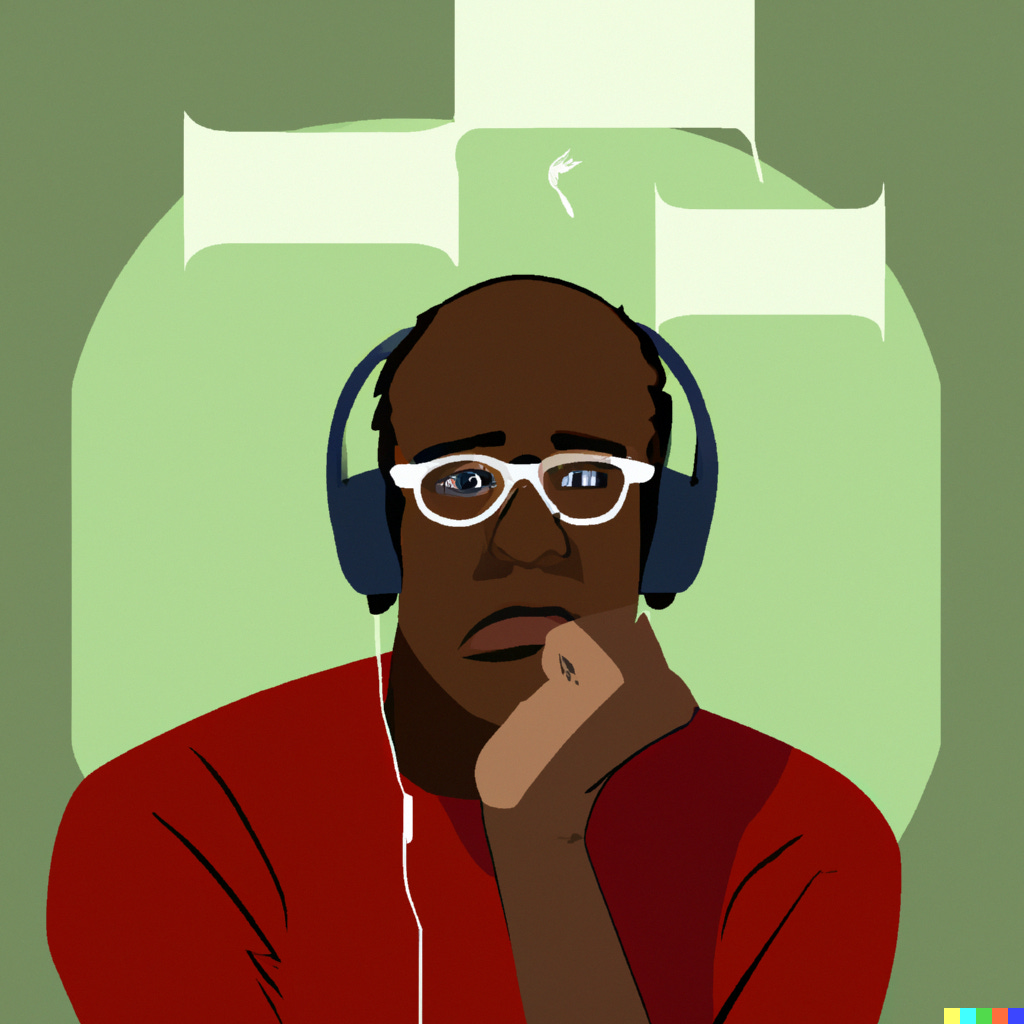
Now, there are of course important tradeoffs to consider. At the very least, if I fill most of my down/deadtime with audio content, I do crowd out my own ruminations. This is a loss of sorts. Maybe I would or could have creative and clever insights emerge from an unstimulated, quiet mind - many creatives and scientists do. So I’m not sure what’s optimal here, and I should probably vary my strategies and not strive for maximum listening. However, I have many obligations related to work, family, community, etc and some of these tasks are mundane or just don’t require full attentional bandwidth. If I forgo podcasts and other audio content, my exposure to new information, news, commentary on world events, breakdown of intellectual topics will be dramatically reduced. Isn’t it better to fill at least some of these gaps with enriching information regardless of its format? This seems like an unalloyed net positive. Can I really be melting my mind by listening to a stream of interviews, lectures, roundtables, and stories? Is this just a simulacra of quality information because audio as a medium may only be amenable to low density information delivery?

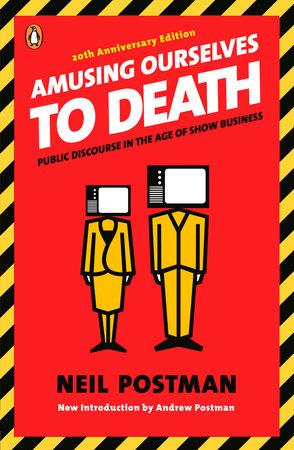
The media theorist Marshall Mcluhan argued that “the medium is the message,” and this line of argument was expanded by another media theorist Neil Postman in his book Amusing Ourselves to Death. Postman specifically argued that television degrades public discourse and education when attempts are made to convey serious and complex information with it. He believed there were certain elements inherent to TV that suited it as a medium only for entertainment. Now, I don’t really find Mcluhan or Postman’s arguments particularly persuasive. Our technology has changed significantly since these arguments were first aired, and I don’t think anyone’s assembled much in the way of empirical research that supports these claims (open to being corrected though). It’s also not clear how this critique would translate to long-form audio, which does appear to be a reasonable format for intellectual content.
In some ways, Mcluhan and Postman’s work has already been somewhat generally contradicted by phenomena like the Flynn Effect, which demonstrates that living humans are better at abstract reasoning that prior generations. Nonetheless, I do think there is something to their ideas. The medium can influence the message, but the questions are how much and in what way. My subjective experience of reading a book is often quite different than listening to a book. However, my subjective experience reading one book at a certain moment in time can be quite different than reading that same book at another moment in time. Unfortunately, I don’t think we have clear answers or guidance. I don’t think neuroscience has anything definitive for us either. Now, I think it is without doubt that a deeply focused active reading session is superior for retention and learning than passive listening to an audiobook or podcast. However, this doesn’t respond to whether a greater exposure to sophisticated ideas and content knowledge even at a superficial level is superior to not having it at all.
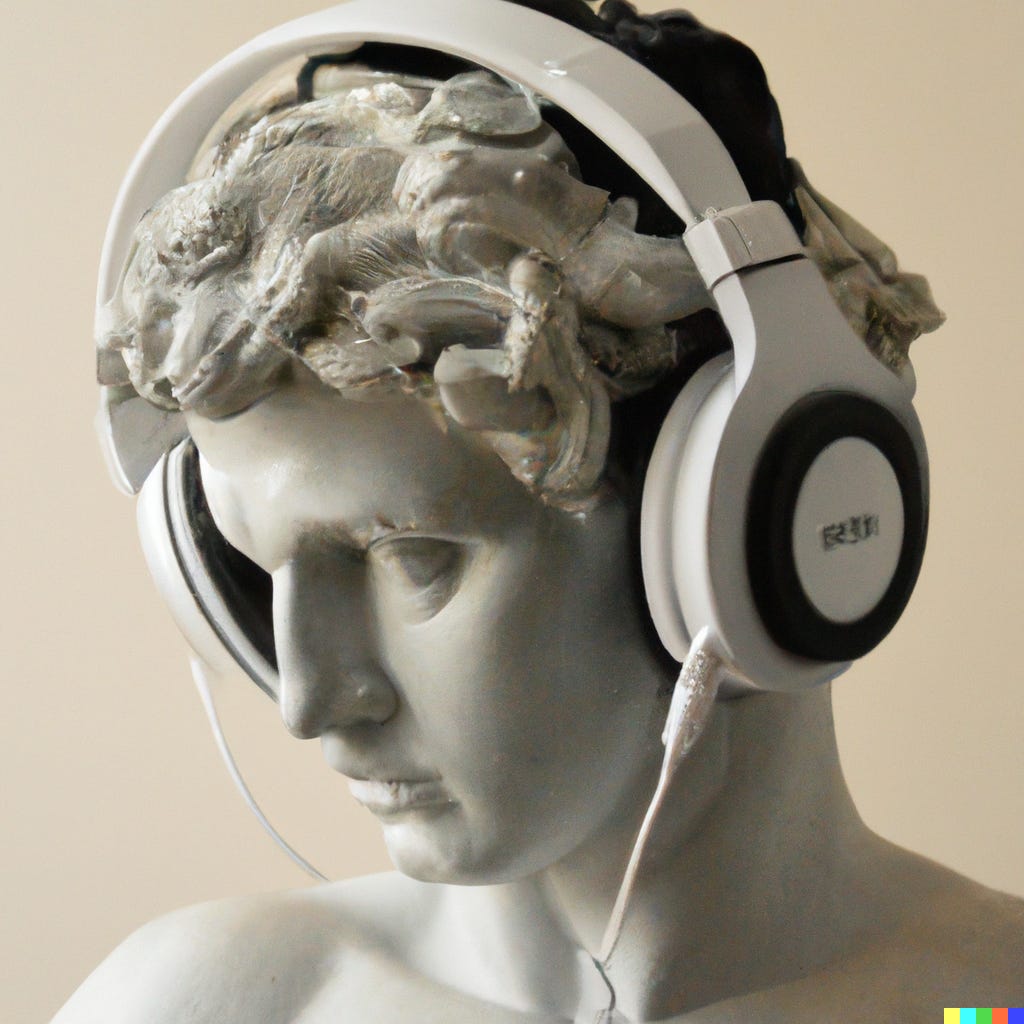
Personally, I am still popping in my bluetooth headphones and firing up the podcatcher.