

Although essential to the sense-making work of biological science,1 evolutionary theories have always been contentious.2 No subject more so than human language.3 Is it unique to Homo sapiens? How did it evolve? On and on the questions go.
The stakes of this debate are understood as quite high as the status of language cuts to the core of metaphysical understandings of mankind. Are we special or merely another mean and small species in the vast but doomed kingdom of Animalia?
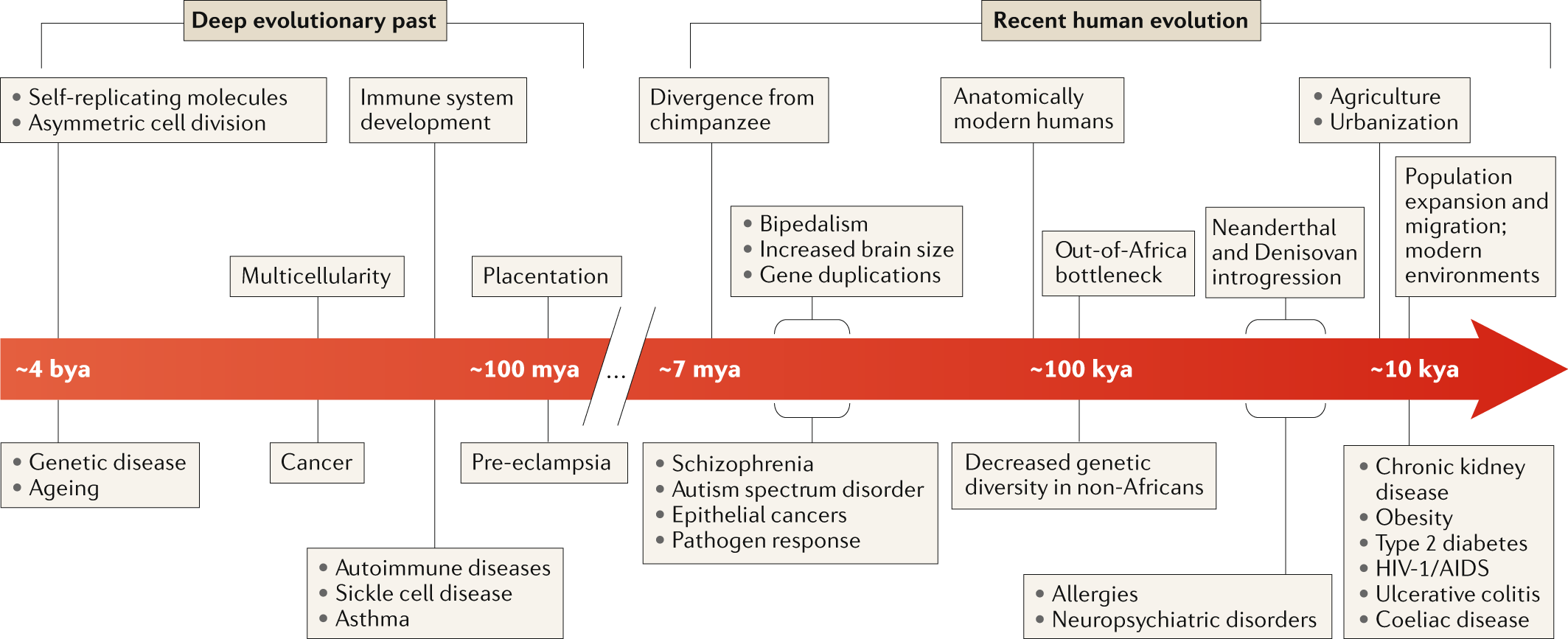
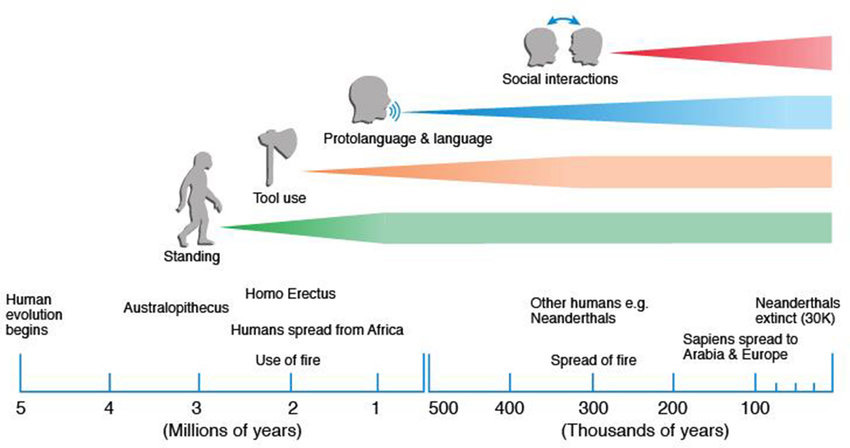
I’ve always flippantly looked past this question, viewing it as a false dichotomy perpetuated by a lobby of insecure proponents of faith and a lobby of reactively juvenile atheists — the latter often comprising a meaningful segment of departments of anthropology and evolutionary sciences at universities and thus, perhaps, deserving a larger share of the blame. However, language, as in a generalized system that allows for the infinite recombination, according to a set of rules (syntax), of a finite number of symbols (words), does clearly appear to be a capacity unique to the human lineage (wherever we want to place the origin point exactly, whether 2 million or 60 thousand years ago).
Given my interests in evolution, my inveterate curiosity, and the high stakes of the language debate, I decided to dip a toe into these waters. Conveniently, I noticed a new release on the very subject: The Origin of Language: How We Learned to Speak and Why by Madeleine Beekman. So I picked up a copy, figuring that it would at least provide one explanation of the origin of language and, in doing so, likely shed some light on alternative theories.4
Just-So Stories Can Be Feminist Too
Although I can’t claim that there is a bonafide trend, I’ve increasingly noticed a growing interest in revising our understanding of the role women in human evolution. The push here is to move beyond female mate choice (sexual selection) to other behaviors like pair-bonding, parenting, caretaking, and cooperation (sometimes called social selection).5 Concurrently, the same tendency aims to degrade received narratives about selection on traits associated with dominance or competence which themselves are traditionally associated with maleness or understood to have been performed by men at a greater frequency: hunting, fighting, tool-making, provisioning, etc. Some recent examples include Father Time by Sarah Hrdy, Eve by Cat Bohannon, The Social Instinct by Nichola Raihani. There are even reactionary examples like Selective Breeding and the Birth of Philosophy by Costin Alamariu.6 I would also be remiss not to mention psychometrician and Substacker Andrew Cutler and his Eve Theory of Consciousness here. His explanatory model of consciousness is meant to account for the Sapient Paradox and argues that consciousness was an adaptation that occurred in women first and was something they transferred to men.7
If I’m to do a bit of mind-reading, the recent revisionism in evolutionary theories is often partially motivated by a need to reconcile commitments to egalitarian feminism with scientifically demonstrated differences between the sexes. This reconciliation project is seen as increasingly salient given the social gravity of bro-forward podcasts and the manosphere. Personally, I don’t share these concerns. I think only a misplaced insecurity about the persuasiveness of the naturalistic fallacy, i.e. the conflation of what is natural with what is good or better., sustains concerns about the social consequences of the popularization of sociobiological or evo-psych theories. But I recognize the power of story (being a reluctant yet passionate Yuval Noah Harari stan after-all) so I’m very willing to hear the evo-feminists out.8
Beekman Blames Language on Parenting Demands
Madeleine Beekman enters the storied yet ignominious debate on the evolution of language by arguing that the intensive nature of caregiving for the young created a selection gradient for complex language. The nature of this selection was mostly “tinkering” as it occurred after a handful of high impact genetic changes differentiated us morphologically from our common ancestor with chimps and created the conditions for runaway brain growth (We’ll circle back to these changes later in my review, but, in the meantime, see my review of Max Bennett’s A Brief History of Intelligence for a long-run view of brain evolution, including the tripling of brain volumes in roughly 2.5mya in our lineage).
More controversially, she contends that complex language ability occurred only in our lineage, excluding our archaic brethren, and happened fairly recently, specifically within the last 100kya. Most scholars of human evolution would place the emergence of complex language between 150-200kya and acknowledge that it is highly likely that Neanderthals had comparable though probably somewhat less sophisticated language ability. It is usually a pretty wise move to bet on longer timelines than whatever is currently proposed today. As our ability to sample the archaeological record continuously improves, many of the timelines of human evolution have been moved back and the picture grows ever more complex (see Razib Khan’s “The longer I live, the wronger I get to be”).
Given the compressed timeline and the Sapiens-specificity to her model, some readers may expect that Beekman forwards a strongly innate theory of language. However, she’s more in the safer gene-culture co-evolution camp though. For Beekman, language is only partially innate with a substantially acquired component. Her position splits the difference between two historical giants in the cognitive sciences: Noam Chomsky and B. F. Skinner. Chomsky famously argued that language arises from the activation of an innate capacity (the Language Acquisition Device or LAD) and that language has a natural and universal grammar. Contrastingly, Skinner argued that language is a special type of conditioned behavior. In other words, children learn the meaning of arbitrary symbols by association and then are rewarded for manipulating these arbitrary symbols properly, i.e. when the manipulation facilitates effective communication. Beekman basically combines these positions, metaphorically arguing that language is a virus and the brains of children are a very susceptible and hospitable hosts. The metaphor doesn’t exactly account for why adult brains would be less susceptible and hospitable, but she just assert this as true. She has no way around this fact; it’s blatantly the case that language acquisition is superior in childhood.
There is some unexplained dissonance in Beekman’s position on the importance of children and language with respect to her viral metaphor. This becomes quite apparent when she mentions how children help stabilize pidgin languages as creole languages. Pidgins are simplified languages invented impromptu by adults who need to find ways to communicate across different language backgrounds. Pidgins mature into creoles across generational time as children are brought up by the pioneers of the pidgin language. Beekman jumps at this example as showing that childrearing is important for developing sophisticated language, but she overlooks how pidgins are independently devised by adults. Pidgins very much look like a point in Skinner’s column, though it is unclear how much this extrapolation is relevant to the ancestral environment in which language actually arose. It also doesn’t negate the clear receptivity of the developing brain to language acquisition. If anything, I see this as evidence toward the necessity of a robust proto-language substrate emerging in ancestral species in our lineage. I guess one could argue this substrate was only gestures rather than syntactically organized groups of phonemes, but come on, this strains credulity, right? Nonetheless, Beekman is leaving some ideas on the cutting room floor, dedicating really just part of the sixth chapter of her book to this crucial argument. She simply doesn’t fully examine the ways in which the phenomenon of pidgin languages complements and complicates her thesis about parenting and language.9
Even though there are some out-there aspects to Beekman’s thesis — namely consigning our archaic cousins to inarticulateness and her often hand-wavy account of the evolution related to language, which again I’ll get to in more detail soon — her model is still arguably mainstream. It accounts for language without adding special epicycles in to existing accounts of human origins, requires just a few big shifts in phenotype early in our evolutionary trajectory, and doesn’t make human seem too special (i.e. all the special sauce is classed as little tweaks to primate biology that were refined and scaled by culture). On this last point, Beekman reveals herself as one of the somewhat sophomoric and misanthropic members of her discipline, making periodic asides about the ecological destruction wrought by humans. Looking past this gauche self-loathing, here’s her conclusion to the pivotal chapter on language:
Neither [Alfred Russel] Wallace nor Chomsky could see how a little bit of language would give us a leg up in evolution. But I have argued that our childcare problem was incentive enough to keep climbing. Our tiny babies are in need of extraordinary levels of help. They compete with siblings and others for attention and for resources. Being slightly better at vocalizing your needs than the others may just be enough to put you ahead of your competitors. Mothers, too, would benefit from being just that little bit better at enticing others to help with raising children. With every improved fragment of speech, and every moment of shared understanding, we raised the likelihood our babies— and our species—would survive. Yes, human language makes us fundamentally different from other apes and animals. But all the innovation required for abstract, compositional language can be explained by natural selection. What makes us special simultaneously confirms that we’re part of the natural order.
But What About the Social Brain Hypothesis?
My primary gripe about Beekman’s theory as presented is that she puts very little effort into its core, answering questions like why, how, and when language evolved in mostly an oblique fashion. Why questions are of pre-eminent importance in popular evolutionary narratives. The why holds the story together. So that is why it is strange that Beekman spends almost no time exploring the intensive nature of caring for our young in a comparative way. It is uncontroversial that caring for young among humans is more intensive than it is for chimpanzees, but this still leaves 7 million years of evolution in parenting demands in which the emergence of language could fall either before or after these demands ratchet up. The empirical record is perhaps too thin. Our view of deep history obscured. However, this is no excuse for Beekman just punting on this core issue.
There are also a number of competing explanations for the evolution of intelligence and language alongside parenting demand. The one I find persuasive is the social brain hypothesis (sometimes modified into the cultural brain hypothesis). The basic thrust of the SBH is that brain size is a function of group size in social species. In other words, the demands of the social niche are the selection pressure that mostly drive brain growth. Additionally, this model is dependent on the “high transmission fidelity” of social learning and predicts that species along this trajectory experience a treadmilling where the importance of social learning increases the importance of transmission fidelity to maintaining adaptive gains. Subsequently, the emergence of language as a product of gene-culture co-evolution falls right out of the SBH/CBH.
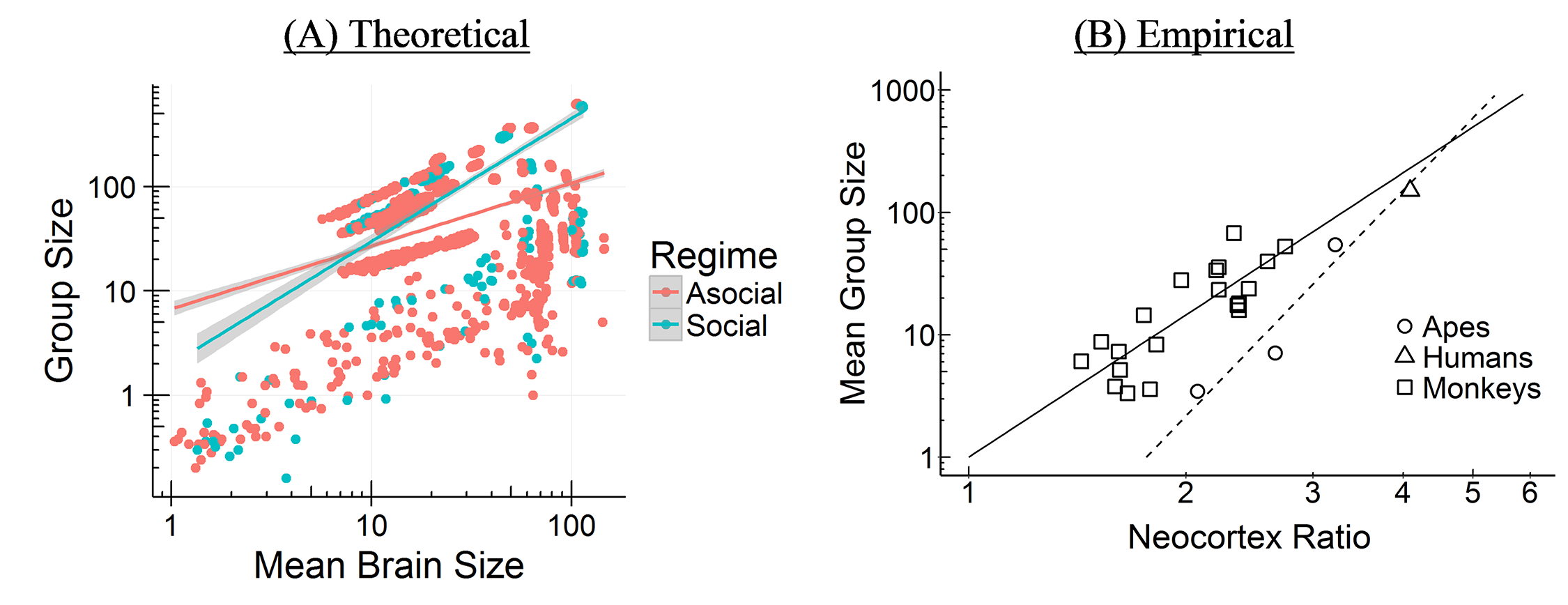
One would think then that Beekman would resonate with the SBH/CBH, but instead she dismisses it based on her interpretation a single study in birds. The study found that among ~1000 species of birds the amount of energy invested in the young is a strong predictor of brain size. Even though this seems like it could be perfectly compatible with SBH/CBH, she argues that the correlation explained by the SBH/CBH has the causal arrow backwards between brain-size and sociality. She thinks “big-brained species are social because they can be.” I can’t explain how outrageous this claim is, especially coming from a behavioral ecologist who studies Hymenoptera. Eusociality is a species-level adaptation that independently emerges over and over again in evolution, given that its found in insects, crustaceans, trematoda, and mammals. Perhaps Beekman is using the word “social” in a very specific way here and perhaps the “big-brained” comment is meant only to apply to larger fauna or within taxonomic orders, but whatever she is thinking here looks wildly incorrect. It’s much more plausible to believe that the conditions of sociality in our lineage created selective pressures for larger brains or at the very least preceded them rather than our larger brains inducing us to become more social. This doesn’t exclude parenting from being an important part of our social niche; it obviously is. However, the broader view also means that other social behaviors and organizational structures, such as competing for mates, hunting, tool-making, gossip, social loafing, female-female hierarchies, and male-male hierarchies, could also have played important roles in the selection for bigger brains and better communication.
I don’t want to obliterate Beekman’s theory. I think it has some merit. The helplessness of our young is an important dimension of human sociality, and it created pressures that likely played an important role in the evolution of our modern phenotype. Nonetheless, it is one among many important social behaviors. It would also be an evolutionary process that sidelines men a bit, making them somewhat superfluous to the emergence of language. Their participation in the process would be limited to their childhoods and the extent of their participation in childcare, which there is reason to believe our lineage didn’t see men taking on a great deal of fatherly duties until recent times. However, the evolution of fatherhood, whether it is actually a biological or cultural adaptation or a mixture is up for debate (it’s a subject I’ve addressed before — see my review of Sarah Hrdy’s Father Time).10 So does is helplessness of our young the x-factor that explains the emergence of language in humans? My guess is no.
Were a Few Lucky Tweaks All It Took to Become Human?
Now, it’s time to circle back to some of the actual evolved biology at play here. An important part of Beekman’s theory concerns the constraints and capacities that preceding adaptations in our lineage, such as bipedalism and increasing brain volumes, contributed to the evolution trajectory in a way that fostered human language. In this way, Beekman’s book ends up mostly being a recapitulation of important milestones in human evolution, foregrounding the alleged handful of major genetic events that are responsible for these obvious adaptations. The whole story is of course just that, a frequently speculative narrative, but some portions of Beekman’s tale are taller than others.
This isn’t to label The Origin of Language as wholly unscientific or even to claim that its chock full of misleading claims (though any ambitious book of popular science will inevitably whither some under a fastidious fact-checking). It is just to call attention to the epistemic hurdles that evolutionary sciences confronts. Studying evolution, especially human evolution, is mostly retrospective. We can’t recapitulate ancestral conditions with an ancestral model hominid and see if the adaptation in question re-emerges. It is difficult to even come up with a good proximal model to study these questions. This places limits on what can be confidently known, but, more importantly, it makes precise and rigorous communication about evolutionary science to a public audience fraught. Beekman shirks this burden some and makes confident yet unjustifiable assertions sometimes. I think this is defensible in popular science so long as there is some deference paid to epistemic humility somewhere, and the author prudentially avoids sniping at scholarly rivals or competing theories. Beekman doesn’t hew closely enough to my standard. She dismisses and criticizes a lot of alternative theories (e.g. the social/cultural brain hypothesis) flippantly, while also providing close readers little evidentiary basis to be invested in the greater plausibility of her theory. Beekman would have made her book more valuable if she had considered alternative models with greater consideration.
Now, I think it is worth walking through the evolved biology because the fact that major adaptations occurred in our lineage is inescapable and begs for explanation. Relative to other primates, our nakedness, endurance, dexterity, cooperation, and intelligence have to be accounted. Insofar as popular science on human evolution is telling just-so stories, the factual bounds of these stories are highlighted in neon. Solipsistically, any narrative of how-we-came-to-be is inherently exhilarating to a curious mind. We can’t help but indulge.
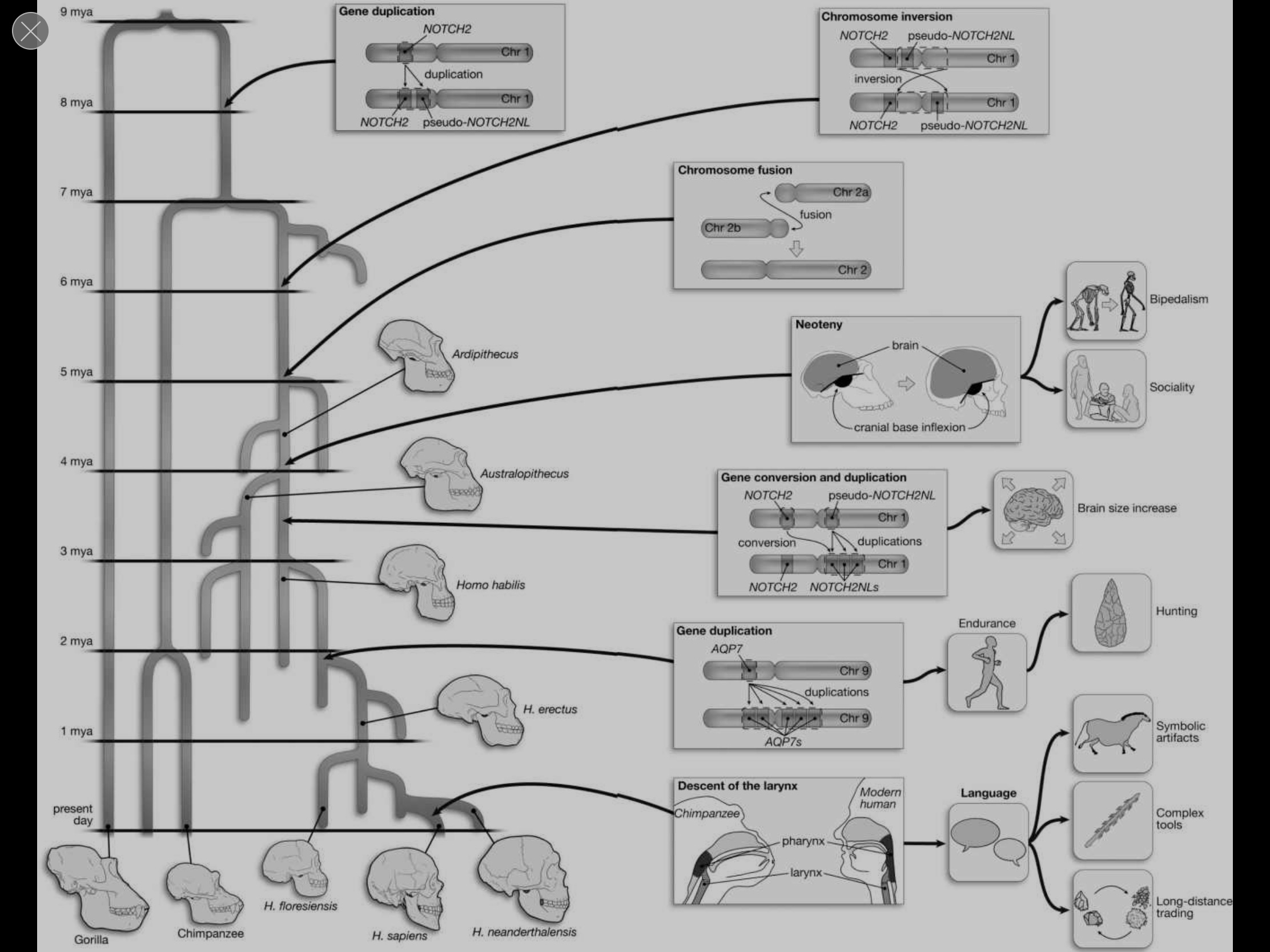
As a geneticist, I found Beekman’s evolutionary account thorough in that it often married specific genomic changes to specific adaptive milestones— usually these narratives recap adaptations and speculate about the selection pressure and population dynamics that brought them forth. However, I was also surprised by the simplicity of the molecular details. In the introduction to the book, she plainly asserts, “Our descent from other apes in the last few million years or so boils down to a mere handful of genetic and morphological turning points.” Discounting the fact that the work is one of popular science where simplifications and generalization are necessary, I was still made apprehensive by this claim, especially because it was ironically accompanied by several skeptical and sometimes sardonic expressions about claims from the fields of behavioral genetics and sociogenomics, i.e. fields that allege that genetic variation can account for meaningful differences in the variation in social and behavioral phenotypes in human populations. If relatively small genetic changes can explain the phenotypic differences between other primates and humans, then it should be trivial to believe that other variation in genes account for a smaller degree of intraspecies variation in behavioral phenotypes. There is perhaps a way to reconcile these beliefs by somehow differentiating among the types of genotypic variation and their phenotypic impact, but logically there’s a contradiction to believe in one of these claims but not the other.11
Contrastingly, a different story was told by David Reich in his 2018 book Who We Are and How We Got Here. In a section titled “The Siren Call of the Genetic Switch,” Reich recounts the rise and fall of Richard Klein’s theory of a rapid transition into behavioral modernity circa 50,000 years ago and highlights the rare example of recent and purportedly high impact evolution in the FOXP2 locus with respect to human language ability. Reich concludes the section humbly (emphasis mine):
The sad truth is that it is possible to count on the fingers of two hands the examples like FOXP2 of mutations that increased in frequency in human ancestors under the pressure of natural selection and whose functions we partly understand. In each of these cases, the insights only came from years of hand-to-hand combat with life’s secrets by graduate students or postdoctoral scientists making engineered mice or fish, suggesting that it will take an evolutionary Manhattan Project to understand the function of each mutation that we have and that Neanderthals do not. This Manhattan Project of human evolutionary biology is one to which we as a species should commit ourselves. But even when it is carried out, I expect that the findings will be so complicated—with so many individual genetic changes contributing to what makes humans distinctive—that few people will find the answer comprehensible. While the scientific question is profoundly important, I expect that no intellectually elegant and emotionally satisfying molecular explanation for behavioral modernity will ever be found.
Beekman, a behavioral ecologist whose primary model organism appears to be Hymenoptera (especially honey-bees), alternatively forwards a handful of major genetic events that have differentiated the human lineage from the nearest extant primate lineage (Pan) after divergence from a common ancestor around seven million years ago. This is, of course, distinct from differentiating humans and Neanderthals, which is a subtler venture. Debatably, the Reich and Beekman positions can be reconciled. However, Reich was speaking to a very similar question, especially because many consider Neanderthals and other archaic humans to be members of our species and thus quite comparable on human-specific traits, including symbolic and recursive thought. So the question becomes about what molecular changes account for the suite of phenotypes, mostly cognitive and social abilities, that are considered specially or saliently human.
Here’s a summary of the evolved biology in that forged modern humans according to Beekman:
Exquisite Developmental Timing - Wind the clock differently and the whole world changes.
Ontogeny doesn’t recapitulates phylogeny, but nature can repurpose and iterate on inherited developmental programs thanks to the cumulative nature of evolution. One of the ways this is done is by subtle tweaking of the timing of developmental processes. These programs are typically signaling pathways linked gene regulatory programs linked to cascades of gene expression, which in turn feedback into the same or different signaling pathways. Beekman doesn’t exactly finger a major specific change that was essential to humans, but she selects a number of flashy examples12 and summarizes some fundamental findings in developmental biology so the reader can fill the picture in themselves. The takeaway from the picture she paints — mostly with respect to Sonic Hedgehog (SHH), Hox genes, the Notch pathway, and bHLH transcription factor 7— is that small modifications to regulatory elements in the genome, which turn genes on and off at different times, facilitated large changes to the overall developmental program, impacting phenotypes in dramatic ways too.13
From 24 to 23 — Losing a chromosome to become human.
Beekman points out that our chromosome 2 resulted from a “head-to-head fusion of two ancestral chromosomes that remained separate in chimpanzees and gorillas and in all other primates.” This fusion creates issues during meiosis in the hybrids who inevitably form both 24-chromosome gamete and 23-chromosome gamete. Subsequently, Beekman presents two explanations for how evolution may have skirted around the reproductive barrier created by lower hybrid fertility: 1) A subpopulation of individuals with 23-chromosome gametes (the fusion event would have had to happen many times), and these individuals paired off only or largely with each other. Eventually, this matching would entirely isolate the population making only 23-chromosome gametes from the population making 24-chromosome gametes. 2) A small, spatially isolated population led by an alpha-male with the fusion event founded our lineage. The latter possibility seems more likely to me. Both scenarios in part explain the reduced levels of genetic diversity in the human population compared to chimp populations.
The fusion event certainly happened in some way — that’s not in question. Compared to other types of genetic changes, a fusion event is monumental and immediately creates a potential reproductive barrier that requires a solution if a lineage is to survive. Thus, it likely played a crucial role in differentiating our species from the lineage that led to chimps, though it is ambiguous what it meant phenotypically. Beekman doesn’t speculate on the total phenotypic consequences of the fusion, somewhat implying that there were unlikely to be many beyond the impact on fertility. For more on the fusion resulting in chromosome 2 check out John Hawks’ piece: “When did human chromosome 2 fuse?”
An Inversion of Part of the Long Arm of Chromosome 1 - Turn the genes around and speed up evolution.
In molecular evolution, a chromosomal inversion, or when part of a chromosome breaks off, flips around, and reconnects, is known for dampening recombination, which in turn creates "gene nurseries" or regions where genes are marooned and destined to accumulate variation over time.
Beekman claims that after the human and chimp lineages split, an inversion event occurred on part of chromosome 1 and that this was responsible for an important part of the increase in brain growth in our lineage. Beekman points out that the inversion revived a pesudogene called NOTCH2NL, itself the result of a botched duplication of NOTCH2. NOTCH2NL then experienced two more duplications and became involved in regulating NOTCH2, an important gene developmentally that also happens to regulate the rate of maturation in the cells that become neurons (radial glia). This NOTCH2NL triplet is critical to large cranial volumes evidenced by the relationship between copy number variation and head circumferences— a loss of one of the three copies results in microcephaly, while a gain of a single copy results in macrocephaly.
Aquaporin Gene Duplication - Always need to keep one’s cool.
Most people are familiar with the claim that only humans sweat. Though it is a bit misleading, the truth is that human thermoregulatory adaptation is amazingly efficient. It keeps our metabolically demanding brains from overheating. Beekmen argues that the multiple duplications of the Aquaporin 7 or AQP7 gene are responsible for our prolific ability to perspire. She points out that this is likely a pretty old adaptation likely present in Homo erectus (2.5 mya - 1.1 kya).
Skull Shape is Everything - Phrenology but do it right this time.
Beekman recounts how research performed on skulls derived from an ossuary in Hallstatt, Austria has shown that the face, cranial base, and cranial vault are an integrated structure and thus selection pressure likely works on all three at once. She then argues that changes in the angle of cranial flexion occurred as bipedalism emerged which in turn created an opportunity for the cranial vault to swell (our now bulbous heads) which in turn flattened our faces. Our face of course are an essential social interface.
Beekman argues that no novel genes were needed to facilitate the changes to the skull. These seemingly massive differences could be accomplished by some molecular fine-tuning.
She also tacks on the fact that Neanderthals likely did not go through quite the same modifications as they exhibit less cranial flexion, suggested the packing of similarly sized brains was less efficient than ours. Our faces are also shorter, making room for a descending larynx.
Dying to Speak - The descent of the larynx.
Evolutionary biologists love bringing up the tradeoff between molding sounds and choking created by the location of the larynx in humans. Beekman is not different on this front. Though she has little to say about the molecular changes that enabled the descent of the larynx and tongue, lamenting that soft tissue doesn’t fossilize and as such it becomes a harder question to tackle. Instead she turns to methylome data, arguing there isn’t much genetically that distinguishes us and archaic human (Neanderthals and Denisovans), which imperils her claims about the unique possession of complex language in Sapiens. So it must be epigenetics in her view. To this end, she cites a 2020 study by David Gokhman and colleagues that found that ~900 regions of differential methylation distinguish Sapiens from archaic humans and that may of the affected regions implicated the soft tissue involved in speech.14 Why based on these data alone, does Beekman think archaic and modern human couldn’t speak to each other despite many instances of interbreeding?15 It is unclear.
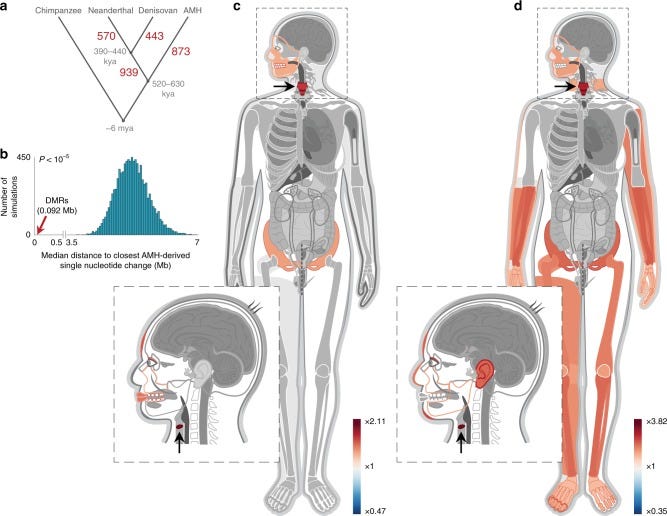
Number and distribution of differentially methylated regions in modern humans compared to closely related lineages. Source.
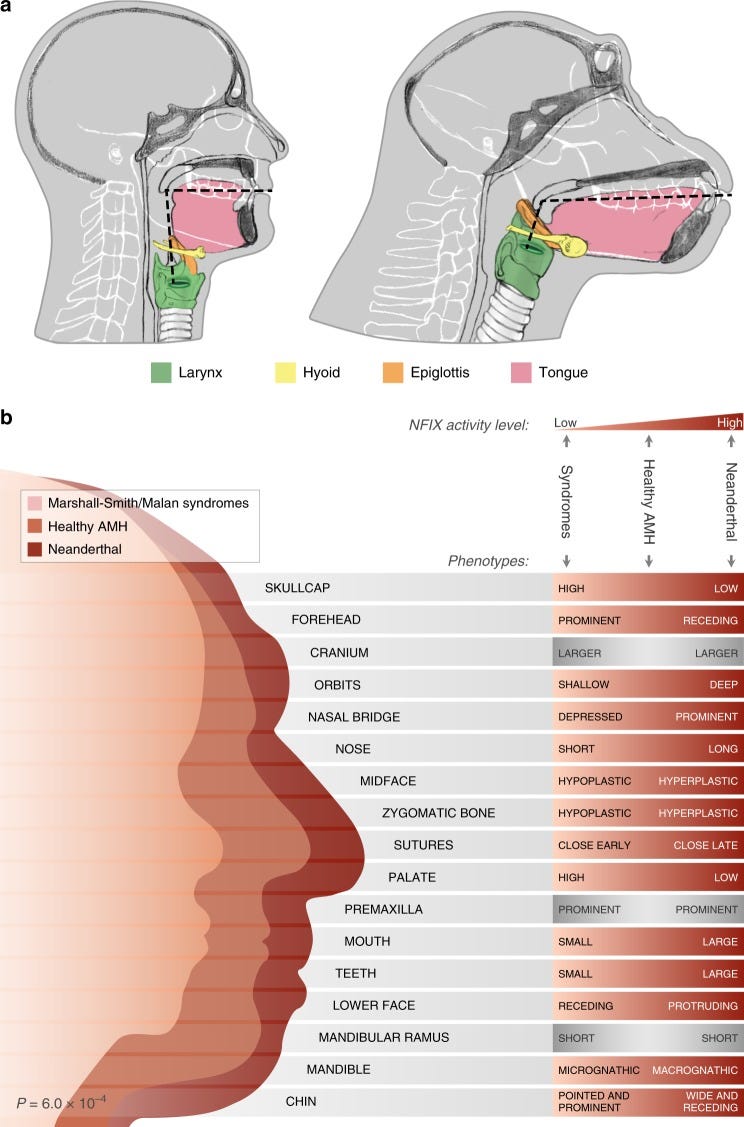
Vocal anatomy of chimpanzee and modern humans and then a comparison of NFIX activity level and craniofacial traits. Source.
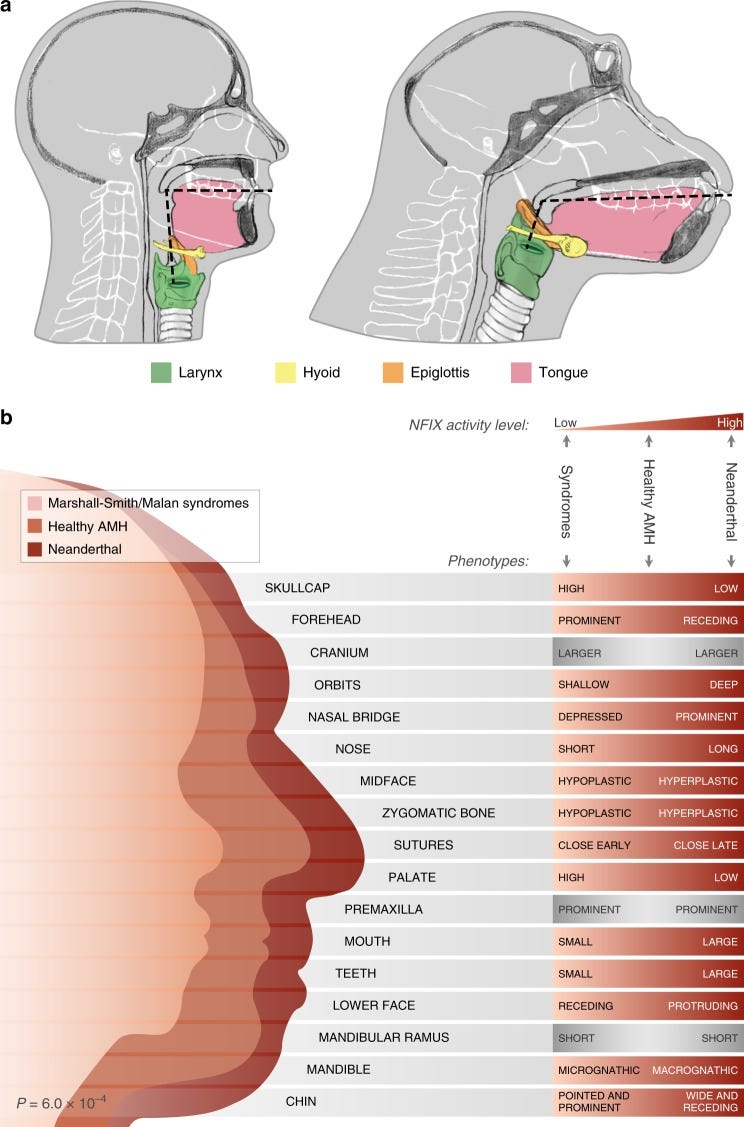
There are a number of morphological and behavioral adaptations that Beekman identifies as crucial in the trajectory to becoming human and being able to speak that she avoids providing much molecular insight on, namely bipedalism and neoteny (“underbaked babies” as a solution to the obstetrical dilemma created by narrow pelvises). Arguably, she would explain these along the lines of “small changes, big effects,” gesturing toward the gene-regulatory-tweaks-in-development story she sets up early in the book. She also generally gestures toward a gene-culture co-evolution story to explain human or human-like behavioral adaptations like cooking or other forms of social cooperation. This is pretty standard evolutionary fare.
Despite some of the clear flaws, such as the paradox concerning genotypic change and phenotypic effect, I think this is a decent recapitulation of human origins. More of the pop-sci books on evolution should address themselves to the evidence in the molecular record even when it is fraught. Some of the limitations here aren’t Beekman’s fault either. There simply aren’t clear answers yet. As the passage from David Reich’s book highlights, the real story behind what makes us who we are is probably unsatisfyingly complicated. It is too piecemeal and incremental to be understood by any one person. Additionally, it would behoove the field of genetics to have a systematic way of distinguishing between “small” and “big” genetic change, specifically with respect to how a trait under prodigious genetic control is constructed. It would mean mapping all of the genotype-to-phenotype possibility space and understanding how to traverse its various dimensions. Unfortunately, mechanistically elucidating the genetic architecture of all human traits anytime soon feels far-fetched. As Reich said, it is a Manhattan-Project-level venture, and, at this moment, there is little urgency to make it happen.
Mixed Recommendation
It is hard to give an unqualified recommendation to The Origin of Language. It is a bit of a mixed bag. Different readers will get different mileage. It contains tantalizing tidbits on the molecular genetics of human evolution and cross-species comparisons of social behavior, but they’re wrapped in a half-baked theory in a domain that already teeming with such offerings. It is especially thin when it comes to thinking about language itself. Plus, it is served alongside a perspective that some readers may find indigestible. Despite the limitations, it is still competent as a primer on the human origins, especially insofar as various adaptations were relevant to the development of language. Alas, language remains a mystery.
A paraphrasing of "Nothing in biology makes sense except in the light of evolution." A now famed adage from the evolutionary biologist Theodosius Dobzhansky.
Here, I’m not referring to historical controversies concerning the theory of evolution itself, such as the Scopes Monkey Trial. I’m referring mostly to debates within the paradigm of evolutionary theory within and between fields. For example, there are many theories that have been posited by evolutionary psychologists that have been vehemently attacked by other scientists who still accept the basic tenets of evolutionary theory.
Many are fond of mentioned the bans that have been placed on scholarly discussion of the topic, notably the ban from the French Academy of Sciences in 1866 and the London Philological Society in 1872.
I was able to obtain a digital advanced reader copy of the text via a site called Netgalley.
This is also not exactly new either. Anthropology, as a discipline, is known for being particularly welcoming to progressive and egalitarian, namely Rousseauan, arguments about human nature.
Alamariu posits that the basic organizing principle of early civilization was matriarchy, which was only supplanted by the conquering invasion of these egalitarian communities by nomadic steppe herders (the Yamnaya) during the Bronze Age. These warriors pastoralists instituted male-dominant hierarchies and “sky father” beliefs eventually leading to modern intellectual inquiry. There are many issues with the thesis, but it is an interesting example of how any appeal to natural origins or innateness can be turned in any political direction.
In our discussions, which can be found here and here, Andrew and I have sometime conflated language and consciousness, treating it as a single package. It is easy to do this with humans given that we’re nearly all constantly narrating our experiences, and this is a salient part of our conscious experience. In my view, however, I think it is almost certainly the case that subjective experience preceded complex language in the course of evolution.
To be honest, I’ve been happy to see an emerging feminism that accepts the realities of sex differences as a feminism in denial about such realities is doomed. Some of these thinkers includes Mary Harrington, Louise Perry, etc.
It also isn’t something she’s published on elsewhere, though she has studied communication in insect models.
Hrdy’s book on fatherhood has a section on language (p.218-220). It argues that other regarding behaviors preceded brain development which of course preceded language. This model contrasts with Beekman’s. Hrdy further argues spoken language was probably first used as symbolic indicators for salient animals, places, people, and relations among people. Additional complexity was layered on in order to manage reputations (gossip), coordinate group activity, and explain things.
Beekman is not entirely clear on her position since it is one largely made by implication in the book. It is perhaps unfair of me to impute this position, but it seems to be the only way to read some of her comments.
There are three splashy examples she pulls from the literature. The loss of an enhancer region that controlled the androgen receptor gene which resulted in the loss of penile spines in our lineage. The loss of the GDF6 enhancer which resulted in toe shortening in our lineage. Finally, the emergence of the HACNS1 enhancer which refined human upper limb and hand development, increasing dexterity.
Here’s how she sums things up:
These are small genetic changes with large consequences for how bodies come to look and what they can do. Subtle changes to the running of a molecular clock, a single mutation to a bone-growing gene, the disappearance of or change to enhances. The resulting morphological effects provided our ancestors with an advantage, allowing them to start exploring new environments, which led, ultimately to the diversification we now see reflected in the fossil record.
What’s missed here is that the stable transmission of epigenetic patterns is something that has to be coded into the genome at some point in time. Otherwise it cannot be faithfully regenerated generation after generation given that meiosis wipes the epigenetic slate pretty clean.
Archaic human introgression into the modern human lineages is also a large unresolved issue in Beekman’s framework. At some point, a Neanderthal mother is caring for a hybrid child and/or vice versa and this lineage is responsible for many of the extant human populations today.
Thank you for the review. Of course every reader has to make up their own mind about the book, but I thought that perhaps it would be worthwhile mentioning that I did not set out to figure out what the origin of language is. My aim was to explain the evolutionary process to a general audience and I thought that humans would provide a good framework. Along the way I found, in my mind, a convincing explanation for why we have language. This was never supposed to be a feminist book, although I do think that the narrative regarding our evolution traditionally has been dominated by a more masculine view. Yet, natural selection acts on the number of offspring an individual can produce (and this includes fathers) and I thought it strange that no explanation for why we have language could directly be linked to an increase in fitness. Also note that I make it clear that fathers are as important as mothers, as a single parent cannot successfully raise a human child.
Tool-making should be considered a principal component of the selective pressures which led to language. According to the Beekman model of behaviors following brains, "after getting big brains and speaking language, we were then able to make tools." I see it in the opposite way: that tools precede language, but that tool-making creates communicative pressures. For example, explaining, gesturing, specialization, and general "memetic emulative ability."
The ability to see a tool, and copy that behavior, seems to mirror the ability to hear language and copy that phoneme. My conclusion, therefore, is that the development of bipedalism was necessary for language, since it enabled free hands, which enabled tool culture, which enlarged the structures needed for memetic emulation, which are the basis of language.